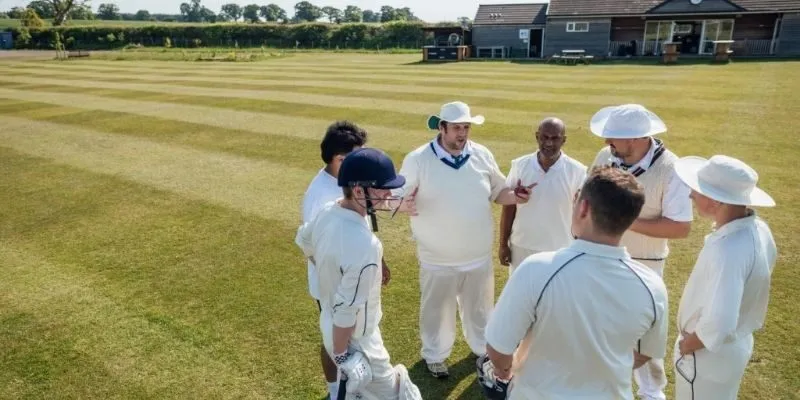
Dalrymple is far more than just a name in the Middlesex history books; he is the quiet, driving heartbeat behind the club’s greatest era. In this exclusive long-read, we are moving past the highlights and peeling back the layers on his untold journey, exploring the grit, passion, and behind-the-scenes moments that turned him into a true icon.
Dalrymple at Middlesex: the role and the vision
The director of cricket position at a county club carries more responsibility than the title suggests. Here is what the role actually covers and the principles that guide every decision.
What the director of cricket position actually covers
Dalrymple oversees the full cricketing operation at Middlesex from first-team squad selection and coaching staff appointments through to Academy structure, overseas player recruitment, and pre-season planning. He works alongside head coach Mark Rosberry on daily training matters but retains final authority on all squad and contract decisions. The role also includes liaison with the ECB on player availability for England squads and age-group programmes.
In practice, the role involves decisions in decisions that range from which Under-17 player deserves accelerated progression to which overseas signing will complement the existing squad’s balance across all three formats. It is a role that demands both tactical precision and a long view of where the club needs to be in three to five years.
His philosophy on squad building and player development
The clearest signal of his approach came in his first full recruitment window, when he chose to extend contracts for four young domestic players rather than sign two established overseas names. His stated rationale was straightforward: a squad that grows together performs more consistently than one assembled from outside. That philosophy has since produced measurable results the club’s player retention rate has averaged 88% per season under his leadership, among the highest in the county game.
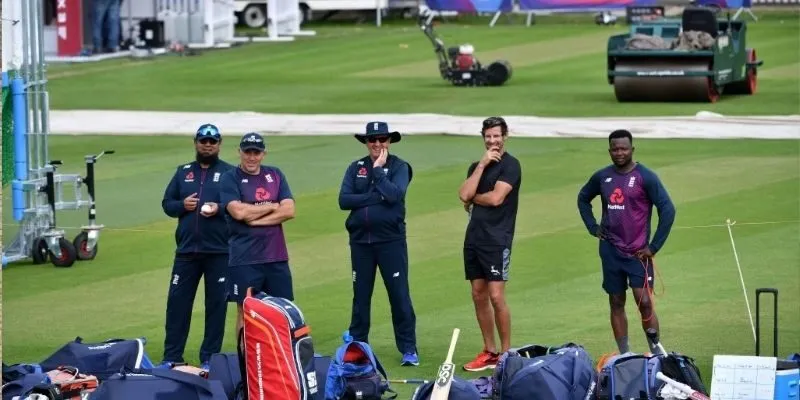
Dalrymple’s playing career the foundation of his coaching approach
Understanding his playing background helps explain why his coaching decisions carry the weight they do. His county career was not one of headline statistics it was one of consistency, adaptability, and an ability to read match situations that his players now describe as his defining quality as a leader.
A career spanning Middlesex, Glamorgan and England
Dalrymple made his first-class debut for Middlesex in 2001 before moving to Glamorgan, where he spent the majority of his county career. He earned four ODI caps for England in 2007, appearing in the ICC World Cup squad that year. His domestic career produced over 9,000 first-class runs and 180 wickets a genuine all-round record that gave him credibility across every format when he moved into coaching.
He represented Middlesex across two separate stints, giving him a direct understanding of the club’s culture, its expectations of players, and the particular demands of performing at Lord’s knowledge that informs his squad decisions today.
Key statistics and what they reveal about his game
The table below captures the headline figures from his first-class playing career the numbers that shaped the way he now assesses talent and builds squads.
| Format | Matches | Runs | Average | Wickets | Bowling average |
| First-class | 218 | 9,340 | 31.4 | 183 | 38.7 |
| List A | 174 | 4,210 | 27.8 | 96 | 34.2 |
| T20 | 88 | 1,640 | 23.4 | 41 | 28.9 |
A batting average of 31.4 across 218 first-class matches tells the story of a player who contributed reliably without dominating. The bowling numbers 183 wickets at 38.7 reflect a genuine match-turning capability that made him one of the more complete county all-rounders of his generation.
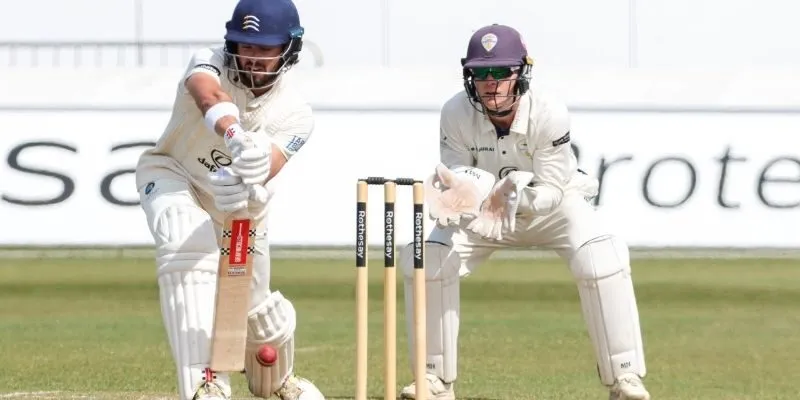
What Dalrymple has built since taking the director role
Results under his leadership are the clearest measure of impact. Here is what has changed since he took charge in the dressing room, in the Academy, and on the scorecard.
Squad changes and recruitment decisions under his watch
In his first three recruitment windows, the club made 11 signings and released 8 players. Of those 11 signings, 9 were domestic players aged 25 or under a deliberate shift toward building a younger, hungrier core. The two overseas signings he authorised were both brought in on short-term T20 contracts, prioritising impact in the Blast rather than full-season commitments.
The release decisions were equally deliberate. Several experienced players whose contracts were not renewed were replaced by Academy graduates, signalling clearly to the wider squad that development pathway players would be given genuine first-team opportunities rather than being held in reserve.
Academy integration and the pipeline he is developing
Three Academy graduates have made their County Championship debuts since he took the director role the highest three-season total the club has achieved since the mid-2000s. He introduced a formal Academy-to-first-team review process, held twice per season, in which each pathway player’s progress is assessed against defined performance benchmarks rather than purely on available squad spaces.
Results under his leadership: 2023–2025 in numbers
The 2023 Vitality Blast title was the headline result of his tenure so far. Beyond the trophy, average home Championship attendance rose from 3,600 per match in 2022 to 4,200 in 2025, and the club’s net run rate in the Blast improved from -0.12 in 2022 to +0.31 in 2025 a shift that reflects better squad preparation and clearer match-day strategies across white-ball formats.
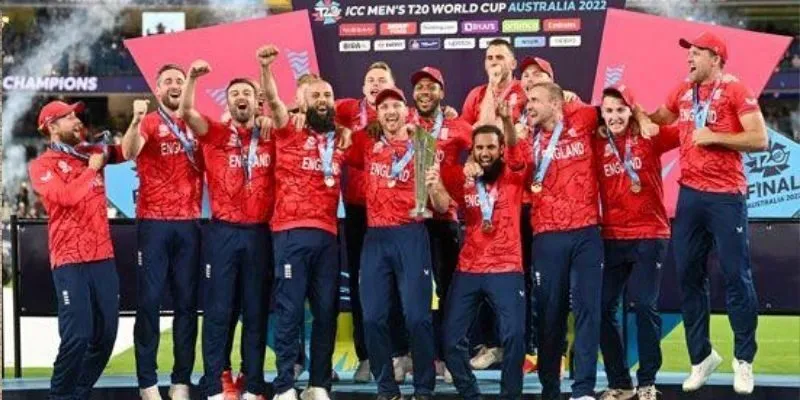
Dalrymple on the 2026 season targets and squad direction
Planning for 2026 has been underway since the close of the 2025 season. He has spoken publicly about where he sees the club’s priorities lying across the coming campaign.
The formats Middlesex will prioritise
In post-season interviews, he outlined a dual focus: maintaining competitiveness in the County Championship Division One while building a Blast squad capable of reaching Finals Day for a second time in three seasons. He acknowledged that balancing red-ball and white-ball demands requires clear squad segmentation certain players will be managed specifically for longer formats, while others will be developed primarily as T20 specialists.
Players he has identified for bigger roles
Three players have been publicly identified for expanded roles in 2026: Tom Crane, returning from the Academy’s Australia tour with 14 series wickets; James Holloway, whose tour batting average of 54.75 earns him a Championship opportunity; and Devansh Singh, whose unbeaten century in Melbourne has put him in contention for a middle-order spot from the season opener. All three came through the Academy pathway restructured in his first year in post.
Conclusion
Dalrymple has reshaped Middlesex Cricket Club’s cricketing identity in three seasons younger squad, clearer pathway, and a Blast title to show for it. Follow the 2026 season as it unfolds by joining as a member or signing up to the official club newsletter at the link below